Thursday, 31 December 2015

2015 - A Year in Review

2015 is coming to a close, so is time for the annual look back.

The Good...
The blog is still getting a reasonable number of hits (155K as of today), but the youtube channel is doing really well and, if trends remain the same, will have more hits than the blog in roughly 5 months. No infected batches this year, and instead, I've brewed two of the best beers I recall making - These Gose Christmas, and an unnamed IPA I haven't bothered blogging about yet (and whose keg is nearly empty).

I also brewed batch #300 this year; a pretty notable milestone. Granted, I did not know at the time that it was batch #300, so in place of brewing something good I instead brewed a rather bland pale ale that didn't even warrant a blog entry (and even being beer #300, still doesn't warrant a blog entry).

The Bad...
Brewing output is down - all in (wine + cider + beer) I managed a paltry 14 batches this year. In my defence I did a compete tear-down and rebuild of my basement, plus added a giant new deck on the house. But the brewery (and my back) suffered as a consequence.

The Ugly...
Unlike last year, I get to leave the ugly slot empty this year. And that, folks, counts as a victory.


Some Quick Stats
My Favourite Blogs of 2015
(in no particular order)

Whats Coming Up in 2016?

December 9, 2016. And no, this isn't because its the 51st anniversary of 'A Charley Brown Christmas' (originally released Dec 9, 1965). Nor is it a celebration of the eradication of small pox (Dec 9, 1979). Nor is it a celebration of the birthday of actress Judi Dench (best 'M' of the Bond series, so far). Rather, it is the 20th anniversary of my first brew day! I've already brewed the beer to be consumed on that day...and I'm planning on the same day of re-brewing that first beer (although hopefully making a more palatable batch this time)...

Friday, 4 December 2015

Tasting Notes - Well There Gose Christmas

Picture doeen't do it justice; In the
right light the beer is medium-red,
and the head pink..
 A few weeks ago I blogged a recipe of a Christmas-themed Gose that I was brewing - flavoured with hibiscus, orange, cranberry and cinnamon, this was intended to be a unique Christmas beer for my winter enjoyment. So its time for some tasting notes.

I knocked this f***er out of the park. Hell, this may be the best kettle-soured beer I have ever produced.

Appearance: Red. The beer pours with a distinctive red coloured body; not the red of a melanoidin-rich barely based beer, but really really red. Crayon red. The wheat portion of the beer makes itself apparent in the haziness of the beer; combined with the red colour the effect is unexpected and visually pleasing - sadly, my shoddy camera work doesn't do it justice. The head itself is white with tinges of pink. Its highly carbonated, so the head pours thick and fine, and lasts for most of the pint.

Aroma: The cranberries dominate the aroma, with their unique sharp fruit character, along with a notable lactic aroma, shining through. Behind that is the sweet/berry aroma of hibiscus, a slight bready character, and a hint of yeastiness.
Belgian lace lasts right to the end


Flavour: This is where this beer shines. Up front is a bracing lactic sourness. The "tang" of the cranberry works alongside this, creating an overall "sourness" far more complex than what you normally get with a kettle sour, and yet retaining the clean sour profile that characterizes kettle soured beers. The hibiscus really acts to balanced this acidity through providing a sweet note - some sort of unfermentable glycoside, I assume - along with emboldening the fruit character provided by the cranberries. The orange plays a minor background role, giving a subtle orange-zest character noticeable mostly in the aftertaste. It took a number of test batches to dial-in the salt level to a level I like - and its perfect for this beer. The salt is present, but subtle. It acts more to tie the flavours together and to mellow the beer; the taste of salt is present, but mostly as a flinty character rather than an overt saltiness.

The only thing missing is the cinnamon. But given how wonderful the beer turned out, its absence is a blessing rather than a flaw.

Mouthfeel: Complex is the best description I can give. The beer was brewed to have a light body and be highly effervescent - and it is. The low finishing gravity combined with high carbonation and acidity creates a prickly, light mouthfeel on the tongue, especially as the beer enters the palate. But the salt works in opposition, rapidly adding a fuller, more meaty mouthfeel as the effervescence fades. The aftertaste is a mix of hibiscus sweetness/fruitiness, cranberry "tang" and lactic sourness, and fades in a way which leaves you wanting more.

Overall: If it isn't apparent already, this is a damned good beer. My second-best of the year (#1 to be blogged about soon), likely my best kettle-soured beer of all time, and in all honesty, one of the better sour beers that I've made recently. What it lacks in traditional sour-beer complexity is more than made up for by the interplay of the hibiscus, cranberry, acidity and salt. It is eminently drinkable, and yet, complex enough to be enjoyed slowly in front of a Christmas fire. There are four minor tweaks I would make upon re-brewing: 1) drop the cinnamon completely, 2) increase the hibiscus by 20-30%, 3) use the zest of an additional orange (3 instead of 2), and lastly, 4) brew a double, triple, or even quadruple sized batch. Because there's no way any of this beer will be left by Christmas!

Friday, 27 November 2015

Easy Home Yeast Banking - and a Video!

Wow, two videos in as many weeks - that has to be a new production record for me! This time around the video is on my most requested topic - an easy to implement home yeast banking system. The video outlines a method, based on the use of slants, to store yeast for future use. Managed carefully this method will allow the average home brewer to easily maintain stocks of up to 2 dozen strains with minimal cost or effort.

Because of the length of the video, and the presence of multiple separate methods, I have provided written instructions, below, to complement the video.


Tuesday, 10 November 2015

At long last, a new video!

A frequent question I receive here on my blog, and on other forums, is what microscope I would recommend for home use. This is a difficult question for me - I'm a medical researcher by profession, with microscopy representing the bread and butter of my lab (a bit of eye-candy from my labs work can be found near the beginning of the video). While on the surface this would appear to make me an ideal person to offer advice on microscope selection, alas, its not really true. Because I work with research-grade scopes (which are very pricey) I'm not really experienced in the cheaper, consumer-grade microscopes that are cost-effective for home use.

So in lieu of a video recommending specific models, I've instead put together a video discussing features to look for, along with comparison images to give you an idea of what the various features add to a microscope.

Also, I apologize for the crummy audio; I'm experimenting with screen casting as a way to speed video production (which, in my case, is excruciatingly slow), and haven't quite figured out how to properly balance my mic.

Monday, 9 November 2015

Triple-Recipe Update

I've somewhat fallen down on the blogger job - I'd done three brews in the past week and not one blog post about any of them.

In my defence, the first two batches barely qualify as either brew-days or recipes...enter this years ciders!

The recipe for both is dirt-simple:

Cider #1: This is the classical cider that I've brewed 3 times in a row now (last years recipe) - 20 L of fresh-pressed cider, 3 g potassium metabisulfate, 5 g of yeast nutrient, 3 tsp pectic enzyme and 1 packet Nottingham dry yeast. The process is dirt-simple:

  1. Add metabisulfate, let sit ~4 hours
  2. Add yeast nutrient and pectic enzyme, let sit overnight
  3. Add yeast, let ferment ~3 weeks before transfering to secondary
  4. Age until ready, typically 6 months.
Cider #2: Take the recipe for cider #1, drop the yeast and split everything else in half (its a half-batch). In place of Nottingham, pitch a Belgian yeast (Fermentas T-58, this time around). Everything else is the same. The hope here is to get an effect similar to mulled cider, but without the addition of spice.

Learn-To-Brew IPA
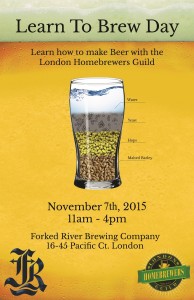
The third brew, brewed this Saturday, was a hop-bursted IPA which I brewed at my brewing clubs annual learn-to-brew event held at Forked River Brewing. For some reason I decided to go whole-hog on this beer - water additions, sparge acidification, whole hops, and so forth. But because this was a learn-to-brew event most of that (except the hops) got missed during the brew-day, so it may not quite end up where I wanted it. Regardless, its a pretty simple (and good smelling) brew:
  • 6 kg Canadain 2-row malt
  • 450 g Caramunich II
  • 230 g Victory malt
  • 85 g (3 oz) Centennial whole-hops, 15 min whirlpool
  • 85 g (3 oz) Citra whole-hops, 15 min whirlpool
  • Enough of a bitterning hop (N. Brewer), 60 min in the boil, to get the beer to 65 IBU
20 L final volume at 1.064. Mash for light body, use burtonized water, adjust mash pH with lactic acid, irish moss @ 15 min to help clear.

Of course, to replicate this beer add the salts to the boil, rather than to the mash/sparge, forget the irish moss, and boil for ~68 minutes, all while forgetting to take photos of the brewing event because you're too busy teaching new people to brew yakking with anyone who drops by your mash tun.

Thursday, 5 November 2015

Tasting Notes - Training Wheels CPA

Even the dog comes running for some CPA!
So the Training Wheels Canadian Pale Ale has been kegged for a while (truth be told, I'm probably near the bottom of the keg). So how did it turn out you ask? It's pretty good!

The goal of this beer was a beer that was easily enjoyed by both the "big-3" beer drinker and the more craft-orientated brewer. To achieve that end I employed a middle-or-the-road approach to a pale ale; a more interesting malt profile than is the norm for a hoppier pale ale, but then modestly hopped with a mix of citra & centenial.

This combination makes for a pretty good beer - its not going to wow a true hop-head, and it may be a little more than a BMC drinker is used to, but it should keep drinkers in both camps happy...I know its been keeping me happy as I wait for other beers to mature.

Here's the breakdown:

Appearance: Copper coloured and quite clear. Pours with a dense white head that last for the pint.

Aroma: Hop aroma is present but subdued. Because I know what went into it I can pick out the citra fruit notes and the centennial resinousness, but I think that most people would simply say it has a modest new-world hop aroma. Along side that is a wonderful malt aroma - a clear malt/sweet note that is nicely balanced by the hops.

Flavour: The flavour of the beer is pretty good - up-front is a nice maltiness; somewhat sweet, but not excessive. The hop flavour is more subdued than I had expected; a bit of the citra/centennial fruitiness squeaks through, but the resin character of the centennial is pretty much missing. The bitterness is present, but not overt - the balance is definitely towards maltiness, rather than bitterness, but the flavours are balanced. The aftertaste is a mix of malt sweetness and mild bitterness.

Mouthfeel: This was brewed to be a medium-light bodied beer, and that's where it falls. The low mash temp made for a pretty fermentable wort, but the Caramunich II made sure a bit of body remained. Its not bone-dry, but its definitely on the drier side of the spectrum. The beer is refreshing, and leaves the drinkers mouth well whetted after a sip (or chug).

Overall: I achieved my goal - a beer that both a BMC drinker and craft-orientated drinker could both enjoy. That, of course, means that there are some compromises. Personally, I'd like a little more bitterness and hop character...in fact, this beer leaves me with a hankering for a hop-bursted, high-bitterness, IPA. Which, thanks to an 'accidental' over-ordering of the citra and centennial hops, will be happening this weekend at my brew clubs annual Learn 2 Brew event!

And if you're in the London area, you should come by and check the event out:

Sunday, 25 October 2015

Well, There Gose Christmas!

Nearly 2 months ago I blogged a teaser post on the brewing of my 2015 Christmas brew that would be entered into my home brew club's advent event, and given to my beer-loving family and friends.

This post is not about that beer.

Rather, this post is about another winter-holiday themed beer that is both a product of long planning (and fantasizing), plus a bit of last-minute brew-wizardry to make the brew-day happen. Sadly, I have no images of this last-minute brew, as I've recently taken a page from a fellow home-brewers book (hi, Devin!) and begun brewing late at night. Yep, 7 PM - midnight brew "days" do get you around all those irritating day-time things (jobs, family, friends, etc), but make for crappy photo-shooting conditions.

I wish I could claim this recipe as my own, and to some extent it is, but I received a lot of help on this one. The initial motivation for this beer is the table of Gose recipes by Cascade brewing in American Sour Beers; specifically, the all-to-brief mention of the winter gose featuring cinnamon, orange, hibiscus and cranberry. While a gose is a pretty straight-forward sour-ketteled beer, the balance of orange & hibiscus came from a very helpful set of  private messages and public posting of a similar gose recipe by BigPerm over at HomebrewTalk. The remaining balance of cinnamon, cranberry, hops and salt are from my previous brewing experiences with gose and those particular ingredients.

Despite that, there was (of course) a bump in the road. I had planned on souring using Lactobacillus isolated from a bottle of Hottenroth. Unfortunately, the lacto culture got "infected" with yeast (you know you're not a normal brewer when the yeast is the infection), so I was forced to preare a last-minute lacto starter using 1.040 wort @ pH 4.5, a handful of grain, and a "homebrewed" incubator to keep the cultures at 44C. The last-minute starter worked, so the brewday(s) was/were saved.

Additional details and recipe can be found below the fold.