Showing posts with label book review. Show all posts

Friday, 26 December 2014

Book Review: Vintage Beer by Patrick Dawson

Although it may not appear to be the case, I'm actually at the beginning of a series on the brewing (and enjoyment) of vintage beers. This series started nearly two months ago with a post on two well-aged beers I've brewed since starting this blog, and continues today with a review of one of the best beer books I bought this year - Vintage Beer - A Taster's Guide to Brews That Improve over Time by Patrick Dawson.

You'll notice that I said "beer book" not "brewing book", because nowhere in the pages of this book will you find brewing tips or recipes, nor any discussions of bringing commercial-scale processes into the home brewery, nor any discussion relating to home brewing ingredients, scales or methods. Despite this, this is one of the most important home brewing books I've added to my book collection in many years. This book is a must have for any home brewer who brews - or is thinking of brewing - long-aging beers.

Confused? This apparent contradiction is explained below the fold...

Tuesday, 11 November 2014

Book Review: Brewing Engineering

A two years or so ago I began a series of review articles on the various books in my brewing library. I had meant that to be a continuing series, but somehow it all got away from me and I now find myself with over a years worth of accumulated books and not a single word written about any of them.

I've been nudged out of my reviewing funk by Steven Deeds, author of Brewing Engineering, asking I do a review of the new edition (2nd edition) of his book. Free PDF in hand (yes, my services come cheap) I agreed to embark in my first review in over a year and a half...

Synopsis:
This book takes a very different approach to its audience than most brewing books. One complaint I've made about a number of brewing books is that they aim at a very large audience - often to the detriment of the book. For example, Jamil's book "Yeast" targeted both home & commercial brewers, leaving both with too few details in some places and extraneous details elsewhere. From the point of view of a publisher this approach makes sense - the larger the audience the better the commercial success - but often the reader is left wanting more in some places and less in others. One pleasure of this book is that it is targeted squarely at the experienced home brewer - space is not wasted on "common knowledge" items (terminology, brewing process, ingredient characters, etc), nor is space spent on issue only of interest to commercial brewers with hectolitre tanks.

The data-heads out there will appreciate the more systematic approach to the presentation of graphs & data - e.g. giving R2 values for data fitting - and I really appreciated the mathematical approaches taken in some sections. Most of the time this approach works, but there are some cases where the author assumes a level of knowledge beyond what most experienced home brewers would have, leaving even the target audience (and admittedly, scientists such as myself) a little lost. There are also a few sections that are erroneous, or where the author repeats common misconceptions. But these sections are outweighed by the otherwise great information and unique information found between the pages of this book.

I'd also add that this is the first book to my knowledge which does a detailed analysis and description of brew-in-a-bag, which is an ever more popular way of brewing. Overall this is a good book - but one which you won't want to add to your shelf until you've moved past basic brewing and are moving onto a more advanced and technical approach to your hobby.

As always, more below the fold.

Friday, 17 May 2013

Book Review: Wild Brews: Culture and Craftsmanship in the Belgian Tradition

A few weeks ago I came across an old chapters gift card which still had some money on it, so I bought a few brewing books. The first of these (For the Love of Hops) I reviewed last week. I've now worked my way through through the second book - Wild Brews: Culture and Craftsmanship in the Belgian Tradition by Jeff Sparrow.

Wild Brews.
Styles Introduction: 4/5
History of Belgian Brewing: 5/5
Coverage of Wild/Sour Beer Styles: 4/5
Wild Fermentation & Organisms: 5/5
Blending & Other Advanced Topics: 4/5
Homebrewing Procedures: 5/5
Recipes:4/5
Overall: 4.4/5

This is one of the better brewing books I've read in a while. Maybe not quite as good as Designing Great Beers, but it is a very, very, very close second. This book covers the unique 'wild' (or sour) beer styles of Belgium, and does an amazing job of covering every aspect of these styles of beers that you could ever want to know. This book open with a history of sour beers, covering everything from the roots of sour brewing (10,000 years old!), to the development of modern methods, to the abandonment of those methods by all but a few Belgian brewers, and their new adoption in a handful of craft brewers around the world. This is followed by a 'drinking guide' of the major producers products. After this, the book goes into a hard-core look the organisms and chemistry of a wild ferment, and finishes by dedicating the final third of the book to a discussion of how wild brewing can be done by the homebrewer.

If you brew sours, or are even vaguely interested in them, this book belongs on your bookshelf.

More Below the Fold...

Tuesday, 1 January 2013

Book Review: Yeast: The Practical Guide to Beer Fermentation

First, let me wish you a happy new year. Hope 2013 is a blast!

The next book in my book review series is Yeast: The Practical Guide to Beer Fermentationlink, by  Jamil Zainasheff & Chris White of White Labs fame. This is not your typical homebrewing book; indeed, it is an almost-textbook about choosing, using, managing and culturing yeast.

Yeast: The Practical Guide to Beer Fermentation
Fermentation Information: 5/5
Basic Yeast Handling: 3/5
Advanced Yeast Handling: 4/5
Relevence to Home Brewers: 3/5
Overall: 3.75/5

The beginning part of this book is a must read for all brewers. It covers the basics of yeast biochemistry, the chemistry and conditions that lead to various flavour and off-flavour compounds, how to manage yeast in a fermentation to produce the desired flavour profile, and how to get the most out of your yeast.

This section alone is reason enough to buy this book.

Unfortunately, after a strong start this book weakens.  Much of this is due to to attempt by the authors to cover both homebrewing and commercial beer production. This has detrimental effects - for example, in the section on stepping up yeast to pitchble amounts specific guidelines are not provided and instead we are given some general rules plus some equations to work things out for your own brewery - a situation fine for commercial operations with a yeast-lab, but out-of-reach for most homebrewers.

This situation persists for much of the remainder of the book - commercial and homebrewing advice & methods mixed together in a way which is difficult to understand & use in the context of homebrewing.  The book finishes off with a series of lab-based protocols for analyzing yeast for contaminants & yeast characteristics.  While interesting, these too are  methods beyond the capabilities of most homebrewers.

Despite those flaws, in my opinion this is a book that belongs on the shelves of all serious homebrewers.

Sunday, 30 December 2012

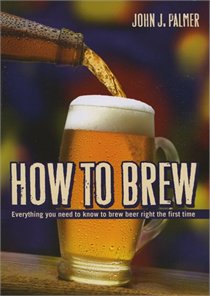
Book Review: How to Brew

John Palmers How To Brewlink is considered to be todays standard book for new brewers.  This is due to two factors - How To Brew is excellently written and is a great guide for beginner brewers. But even better, Mr Palmer has put the first (1999) edition on a webpage, for free.
How To Brew (free version)
Extract-Based Recipes: 4/5
All-Grain Recipes: 3/5
Beginner Brewing Methods: 4/5
Advanced Brewing Methods: 3/5
Other Features: 3/5
Overall: 3.4/5
How To Brew (3rd Edition)
Extract-Based Recipes: 4/5
All-Grain Recipes: 4/5
Beginner Brewing Methods: 5/5
Advanced Brewing Methods: 4/5
Other Features: 4/5
Overall: 4.2/5

The biggest difference between the free and 3rd edition is the up-to-datedness of the recipes and methods. The 3rd edition was printed in 2006, about the time most of our modern methods became cemented int place. In contrast, the free version is somewhat out of date - the all-grain recipes in particular often rely on mash schedules orientated towards the poorly modified grains common in the 1990's rather than the better-modified malts of today.

The recipes in this book (especially the 3rd edition) are really good, with all grain and extract-based versions of most recipes provided. The basic brewing methods are covered excellently in both books, while the 3rd edition does a reasonable job of explaining advanced methods.

Overall, this is a must-have for new brewers. Old-timers will find this book largely superfluous, as anyone reasonably comfortable with all-grain brewing will be familiar with most of what is covered in this book.

Saturday, 29 December 2012

Book Review: Three Recipe Books

Next in my series of book reviews is a review of not one, not two, but rather, three recipe books. These three books fall into the "not sure these were worth the money" category. I purchased all three of these while in my "intermediary brewer" stage, when I brewed using a mix of malt extract, adjunct grains and hops.

Clone Brews
Extract-Based Recipes: 4/5
All-Grain Recipes: 3/5
Brewing Methods: 2/5
Other Features: 1/5
Overall: 2/5
Beer Captured
Extract-Based Recipes: 4/5
All-Grain Recipes: 3/5
Brewing Methods: 2/5
Other Features: 1/5
Overall: 2/5
The Homebrewers Recipe Guide
Extract-Based Recipes: 3/5
All-Grain Recipes: NA
Brewing Methods: NA
Other Features: 4/5
Overall: 3.5/5

Full Reviews Below

Book Review: Papazians Books (AKA The Homebrewers Bible)

Over the years I have accumulated a fair number of books on homebrewing. A few of these are excellent, others are good, a few are not worth the paper they are printed on. I thought I'd use a little of the Christmas break to review them.

The first of these reviews is about two books - The (New) Complete Joy of Homebrewing & The Homebrewers Companion, both by Charlie Papazian. These are not so much two books, as they are two parts of a single, comprehensive book. For many brewers these books are the homebrewing bible - literally the old & new testaments of how to make beer.  Because they are now over 20 years old they are now a little out-of-date, but remain excellent books none-the-less. They have been, and remain, my chief homebrewing books.

The (New) Complete Joy of Homebrewing
General Brewing Knowledge: 4/5
How-To: 4/5
Beginning Brewing: 5/5
Intermediary Brewing: 5/5
Advanced Brewing: 4/5
Recipes: 3/5
Overall: 4.2/5
The Homebrewers Companion
General Brewing Knowledge: 4/5
How-To: 4/5
Beginning Brewing: 4/5
Intermediary Brewing: 5/5
Advanced Brewing: 5.5
Recipes: 4/5
Overall: 4.3/5

Charlies greatest strength is explaining things in a way anyone can understand. As such, these books are accessible to all brewers.  Technical jargon is kept to a minimum, complex subjects are broken down into manageable bits, and different ways of achieving the same end-point are often presented - thereby allowing a brewer to take the route most compatible with their comfort level and budget.

There are two downsides to these books. The first is their age - they are at (or over) 30 years old. As such, many of the methods and procedures described have since been modified and improved. The second downside is the recipes: they are dated and built around the poor-quality products available to brewers at the time the books were written (early 1980's). The recipes are not bad, but have a "homebrewed" taste to them.

Full Reviews Below